|
Write us at info@downside.com
|
Downside®
old
news
| 2007 |
| 2007-10-32
- Oil at $94 |
Back in 2005, we predicted an oil crunch. Today, NYMEX crude hit $94, purely on demand, without any major supply disruption.
We weren't pessimistic enough.
Many of the things we predicted for 2006 happened in 2007. The mortgage meltdown and housing crash happened, a bit later than we expected. Chrysler was sold off at a bargain price.The Iraq war continues as a stalemate. |
| 2007-09-12
- Where are they now? Behind bars. |
Federal
Bureau of Prisons Inmate Locator
Inmate Information for
BERNARD J EBBERS |
 |
Inmate Register Number |
56022-054 |
| Name |
BERNARD J EBBERS |
| Age |
66 |
| Race |
WHITE |
| Sex |
MALE |
| Projected
Release Date |
07-04-2028 |
| Location |
OAKDALE FCI |
|
Bernie Ebbers, former CEO of Worldcom. Serving 25 years in Federal prison in Louisiana.
Responsible for the largest known single-business investor loss due to fraud, $180 billion. |
Federal
Bureau of Prisons Inmate Locator
Inmate Information for
RICHARD A CAUSEY |
 |
Inmate Register Number |
29261-179 |
| Name |
RICHARD A CAUSEY |
| Age |
47 |
| Race |
WHITE |
| Sex |
MALE |
| Projected
Release Date |
10-16-2011 |
| Location |
BASTROP FCI |
|
Enron's former Chief Accounting Officer, in charge of the "creative accounting" that hid Enron's losses.
|
Federal
Bureau of Prisons Inmate Locator
Inmate Information for
JEFFREY K SKILLING |
 |
Inmate Register Number |
29296-179 |
| Name |
JEFFREY K SKILLING |
| Age |
53 |
| Race |
WHITE |
| Sex |
MALE |
| Projected
Release Date |
02-21-2028 |
| Location |
WASECA FCI |
|
Enron's former CEO, Jeff Skilling, is in Federal prison in Minnesota. |
|
| 2007-08-26
- Notes on the current crises |
We have been working on another data-mining project, SiteTruth, which does automated due diligence on the businesses behind web sites. That's why Downside hasn't been updated in recent months. The real reason we don't have much to say about the current market negatives is that we don't have enough information to evaluate them.
Debt markets don't have enough transparency for fundamental analysis. We predicted, over a year ago, "Homeowners with adjustable-rate interest-only loans default and are foreclosed. Housing prices crash as foreclosures glut market." We were right. It was obvious that something had to break. What wasn't obvious was the failure mode. We had no idea who the counterparties in all those mortgage based hedges were, though. Neither did anyone else, including, apparently, top management of some of the parties.
A comment on derivatives generally: no linear combination of bets can produce an expectation higher than the highest expectation of any of the bets. This is why casino "betting systems" don't work. Derivatives are usually linear combinations of bets. Derivatives thus do not have higher expectations than their components. The basic effect of derivatives is to reshape the expectation vs. probability curve, typically to yield a high probability of a moderate gain coupled with a small probability of a large loss.
Remember "portfolio insurance"? Long Term Capital Management? They entered the inescapable "small probability of large loss" region. This time it's the "25 sigma event" in Goldman Sachs hedge funds. |
| 2006 |
| 2006-12-31
- 2006 predictions recap |
We finish the year by looking back at the predictions from the beginning of the year.
- Saudi
Arabia finally admits the Gawar field has peaked. Oil passes
$70 per barrel.Oil did pass $70/bbl, and has been trading in the $60/$70 range since. Close for the year at $61.05. But the Saudis say Gawar has not peaked.
- US
interest rate spike. "Homeowners" with adjustable-rate interest-only
loans default and are foreclosed. Housing prices crash as
foreclosures glut market.
No interest rate spike. Foreclosures are up and housing prices down, but not to the level of a crash.
- Nobody
wins in Iraq. Neither side can force a decision, so both
sides keep bleeding.
That's what happened.
- One
of the big three US car manufacturers goes bankrupt.
Both GM and Ford are in terrible shape, mergers have been discussed, and Delphi went bankrupt, but GM and Ford are hanging on.
- A
major hurricane wipes out another southern US city.
Totally wrong. Very slow hurricane season.
|
| 2006-10-16
- Andrew Fastow behind bars |
Federal
Bureau of Prisons Inmate Locator
Inmate Information for
ANDREW STUART FASTOW |
 |
Inmate Register Number |
14343-179 |
| Name |
ANDREW
STUART FASTOW |
| Age |
44 |
| Race |
WHITE |
| Sex |
MALE |
| Projected
Release Date |
UNKNOWN |
| Location |
HOUSTON
FDC |
|
Andrew
Fastow, the primary architect of the Enron debacle,
is now safely behind bars.
Ken
Lay, of course, is dead.
Sentencing
for Enron's Jeff Skilling is scheduled for October 23,
2006. Sentencing for Richard Causey is pending. Once
those two are in prison, it's over.
|
|
| 2006-10-08
- There's a new member of the club |
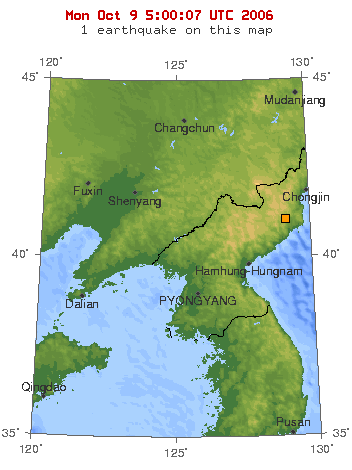 |
USGS
automatic earthquake monitoring system report. |
|
| 2006-09-03
- Drop and give me 20 |
As our
contribution to reducing America's obesity epidemic, Downside
offers the Youth Fitness
Song. This song was commissioned by the President's Council
on Youth Fitness during the Kennedy administration. A record
with this song was sent by the U.S. Government to every school
in America, to be played over the public address system each
morning, while students exercised. It's past time to revive
this. |
| 2006-08-09
- Oil and war |
With
the shutdown of Prudhoe Bay production for pipeline repair,
and threats from Iran to use the "oil weapon", we
are about to find out if Saudi Arabia has the extra production
capacity they claim.
When
Saudi Arabia runs out of extra capacity, any major OPEC country
can force a worldwide oil shortage. The 1973 embargo required
coordination amongst the OPEC countries. Next time, individual
members will have that power. Political events will determine
if it is used, and against whom. |
| 2006-07-01
- Downside's predictions at midyear |
At midyear,
it is time to review our predictions from the beginning of
the year:
- Saudi
Arabia finally admits the Gawar field has peaked. Oil passes
$70 per barrel.
Oil
hit $75 per barrel and remains above $70. The Saudis still
don't publicly admit that Ghawar has peaked, although there
have been hints.
- US
interest rate spike. "Homeowners" with adjustable-rate interest-only
loans default and are foreclosed. Housing prices crash as
foreclosures glut market.
Interest
rates continue to go up, at the Fed's "measured pace",
but no spike or housing collapse.
- Nobody
wins in Iraq. Neither side can force a decision, so both
sides keep bleeding.
That
statement continues to describe the war.
- One
of the big three US car manufacturers goes bankrupt.
GM
is about to be bought out at a very low price, and Ford's
bonds are at junk status.
- A
major hurricane wipes out another southern US city.
Hurricane
season has just started.
We see
no need to change the predictions. |
| 2006-05-25
- Oil production flat |
|
| 2006-05-25
- Guilty, Guilty, Guilty |
Ken Lay
- guilty on all counts. Jeffrey Skilling - guilty on all securities-fraud
counts. Thus ends the Enron debacle.
Neither
is actually in jail yet. Sentencing is set for September 11,
2006. Few of the Enron criminals have started doing their
time yet. That will change now that they are no longer needed
as witnesses. |
| 2006-04-21
- Oil at $75 |
At the
beginning of this year, we predicted "Saudi Arabia
finally admits the Ghawar field has peaked. Oil passes $70
per barrel." Oil has been above $70 for most of the
week. We're there.
No traumatic
events are currently affecting production. No wars. No sabotage.
No embargoes. This is pure lack of capacity. Economically,
"peak oil" seems to be here.
The Saudis
still aren't admitting that Ghawar has peaked. Many suspect,
but few know. Mexico does admit that their biggest field,
the Cantarell, peaked in 2005, and Kuwait has admitted that
their biggest field also peaked in 2005. So two of the big
three have peaked.
The higher
prices are not yet significantly affecting demand in the developed
world. That takes time. The combination of limited elasticity
on the demand side and limits on the supply side imply further
price rises. |
| 2006-04-14
- Downside at 5 |
Five
years ago we started Downside. We were right about the dot-com
crash; it was worse than even we expected. This year we're
predicting trouble due to short oil supplies, too much debt,
and cllimate change.
The problems
the US faces are technically solveable, but we do not yet
see the political will to admit the problems, let alone solve
them. |
| 2006-01-11
- Skilling and Lay on trial |
"This
is a criminal case. The defendants are Mr. Jeffrey Skilling
and Mr. Ken Lay." With those words, the trial of the former
top people at Enron began today. Skilling and Lay may take
the position that they didn't know what was going on (the
"idiot defense"). They may try to blame Fastow,
the former CFO. They may try to argue that Enron was a legitimate
business run into the ground by the people below them. With
eighteen Enron executives already convicted, none of those
defenses are likely to work.
Q:
When we talked as you were becoming CEO, I asked you
what setbacks or failures you'd ever had in your life.
You said none. Do you consider this to be your first
failure?
A:
Maybe this will sound awful, but I don't. I remember
when there were three of us on the 39th floor at Enron,
when we got this whole nonregulated side of the business
going. Like I said, I am very proud of what I and others
accomplished at Enron. We built a company that, 10 years
from now, 20 years from now, is going to be a factor
to be reckoned with. I can probably say I have no regrets.
-
Skilling interview in Business Week, August 2001 |
|
| 2006-01-11
- Why interest rates are so low |
| Interest
rates are still low by historical standards. This is because
China is buying far more low-paying US treasury paper than makes
economic sense. This is part of a deal with the Bush Administration - the US doesn't erect trade
barriers against China's products, and China doesn't pull their
money out of the US. This deal makes possible high deficits
and tax cuts without financial collapse.
If China
pulls their $250 billion out of US Treasuries, or even stops
further Treasury purchases, interest rates will go up. If
mortgage rates go up, the speculators who have interest-only
loans with adjustable rates see their payments rise. Many
will default, resulting in foreclosure. The housing bubble
finally pops. Baby boomers who expect to sell their houses
at a profit lose their equity.
China
has not made significant US Treasury purchases in the last
six months. China has stopped financing the US deficit.
CNN reported on January 6th that China
is discussing moving its foreign exchange reserves out of
US Treasuries. This is significant.
The government
of China has been using this economic power for political,
rather than economic leverage. This statement
by Zheng Bijian, a recent member of the Central Committee
of the Communist Party of China, in People's Daily, the official
organ of the Chinese government, is worth a close reading.
This outlines the political conditions for continued economic
support of the United States. The style is diplomatic and
oblique. It is clear, though, that China sees itself as being
in a position to dictate terms. Which China is. China now
has the power to pull the plug on the US economy at modest
cost to themselves. Actions here will be politically, not
economically motivated, so we cannot make any predictions.
We should expect, though, that any significant political disagreement
between the US and China will result in a rise in US interest
rates.
It's
now necessary to follow the statements of the People's
Bank of China as closely as one follows those of the US
Federal Reserve. |
| 2006-01-09
- The foreclosure trap |
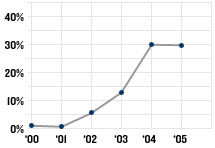 |
Interest-only
loans as a percentage of new loans.
(Data from Loan performance)
People
with these loans are not homeowners. They're renters,
with an option to buy. One interest-rate spike and they're
out on the street. |
|
| 2006-01-01
- Predictions for 2006 |
Consistent
with our tradition of pointing out obvious negatives, we offer
the following predictions for 2006:
- Saudi
Arabia finally admits the Gawar field has peaked. Oil passes
$70 per barrel.
- US
interest rate spike. "Homeowners" with adjustable-rate interest-only
loans default and are foreclosed. Housing prices crash as
foreclosures glut market..
- Nobody
wins in Iraq. Neither side can force a decision, so both
sides keep bleeding.
- One
of the big three US car manufacturers goes bankrupt.
- A
major hurricane wipes out another southern US city.
Happy
New Year. |
| 2005 |
| 2005-12-28
- Richard Causey pleads guilty, cuts deal |
|
Richard
Causey, formerly Enron's chief accounting officer, has
agreed to plead guilty and cooperate with prosecutors.
Just in time for the trials of Skilling and Lay next
month.
Movie
recommendation: Fun with Dick and Jane. If you've
followed the Enron debacle closely, you'll recognize
some scenes. And check the ending credits. |
|
| 2005-12-12
- Kuwait's largest field just peaked, early |
| The
second largest oil field in the world, the Burgan field in Kuwait, just
peaked, years earlier than expected. The reserve numbers
from OPEC countries have been known to be overly optimistic
for years. Reality is now intruding. |
| 2005-05-22
- Oil |
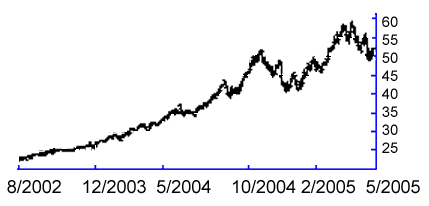 |
June
2005 oil futures
(NYMEX) |
From
a fundamentalist perspective, oil is now the major driver
of the economy. We will thus have more to say about oil from
now on.
Keep
these points in mind when looking at the chart above.
- Oil
demand is only weakly elastic in the short term on the demand
side. On the supply side, only Saudi Arabia had excess capacity,
and they are now at maximum output.
- Capacity
increases slowly. Reserves are not increasing at all. Demand
is increasing steadily.
- Large,
short-term price swings are to be expected, because supply
and demand are both closely matched and inelastic. Watch
the annual price trend, not the daily variations. Press
reports focusing on small day to day changes are not significant.
Read "Beyond Oil",
by a Shell petroleum geologist who knows something about the
subject. |
| 2005-03-15
- Bernie Ebbers convicted |
|
Bernie
Ebbers, who led Worldcom into the tank, was convicted
today for his role in the biggest fraud and bankruptcy
in all of history. As the indictment puts it, "from
in or about September 2000 through in or about June
2002, BERNARD J. EBBERS, Scott D. Sullivan,and their
co-conspirators engaged in an illegal scheme to deceive
members of the investing public, WorldCom shareholders,securities
analysts, the SEC, and others, concerning WorldCom ’s
true operating performance and financial results."
Worldcom's MCI unit was the source of the "Internet
traffic is doubling every 100 days" statement that
fueled the dot-com boom, and that false statement was
part of that fraud scheme. |
|
|
|
|
| 2004-10-11
- The weakening dollar |
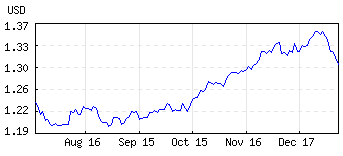 |
Dollars
per euro, 2004. |
The
Federal deficit doesn't mean free money for the Government.
There's a price to be paid. |
| 2004-10-11
- The coming mortgage crunch |
|
The
next crash looks to be housing-related. Fannie Mae is
in trouble. But not because of their accounting irregularities.
The problem is more fundamental. They borrow short,
lend long, and paper over the resulting interest rate
risk with derivatives. In a credit crunch, the counterparties
will be squeezed hard. The numbers are huge. And there's
no public record of who those counterparties are.
Derivatives
allow the creation of securities with a low probability
of loss coupled with a very high but unlikely loss.
When unlikely events are uncorrected, as with domestic
fire insurance, this is a viable model. When unlikely
events are correlated, as with interest rate risk, everything
breaks at once. Remember "portfolio insurance"?
Same problem.
Mortgage
financing is so tied to public policy that predictions
based on fundamentals are not possible. All we can do
is to point out that huge stresses are accumulating
in that sector. At some point, as interest rates increase,
something will break in a big way. The result may look
like the 1980s S&L debacle. |
| 2004-07-08
- Kenneth Lay arrested |
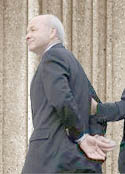 |
Kenneth
Lay, the former Enron CEO, has finally been arrested.
He claims he didn't know his company was a Ponzi
scheme.
Glisan
gave up Fastow. Fastow gave up Skilling and Lay.
Will Lay give up Bush? |
|
| 2004-06-22
- Spam purporting to be from Downside |
|
An
unknown party has been using the Downside name to promote
a stock. The stock being promoted is XcelPlus (XLPI.PK).
We are not involved with this promotion, and our name
is being forged by the promoter.
A
quick look at XLPI shows it to be a thinly traded penny
stock in the Pink Sheets. The company, "Xcelplus
International Inc.", is a Virginia corporation.
It does not appear to be registered with the SEC, despite
being publicly traded and promoted to the public. This
is highly suspicious. We have notified the SEC. |
| 2004-06-16
- Lea Fastow behind bars |
|
Federal
Bureau of Prisons Inmate Locator
Inmate Information for LEA W FASTOW |
 |
Inmate Register Number |
20290-179 |
|
Name |
LEA W FASTOW |
| Age |
42 |
| Race |
WHITE |
| Sex
|
FEMALE |
| Projected
Release Date |
UNKNOWN |
| Location |
IN
TRANSIT |
|
Two
down, more to follow.
Next,
Enron CFO Andrew Fastow. Convicted but still on
the street. Skilling has been indicted, with a
trial to come. |
|
| 2004-05-16
- Non-flying cars |
| The
Moller Skycar from
Moller
Corporation has been in the news recently. We have
some negative information
about that company. As the SEC put it in their fraud complaint,
"As of late 2002, MI's approximately 40 years of
development has resulted in a prototype Skycar capable
of hovering about fifteen feet above the ground." |
| 2004-04-14
- Downside at four |
Four
years ago today, we started Downside. We had this to say:
|
2000-04-14
- Today begins the Second Great Depression
All
bubbles burst. This one just did. The great Internet
bubble is over.
First we had Internet companies with no profits.
Then we had Internet companies with no revenue.
Towards the end, we saw attempts to take public
Internet companies with no operations. It had
to end, and it just did. This is healthy. It's
not the end of the Internet, just the end of the
stupidity. Now we have to get through a return
to reality. "Reality", in this context, is a return
to historical P/E ratios, in the 6 to 20 range.
What about the companies with no earnings? Uh
oh. Losing money on every sale and making it up
on volume is a joke, not a business plan. |
We
said that Internet stocks were insanely overpriced.
We said that the market as a whole was 2 to 3 times
higher than it should be. We said that the bubble would
burst sooner, rather than later. We were hated and derided
as pessimists. We were right.
The
last year has brought some recovery. But equity prices
are still far too high by historical standards.
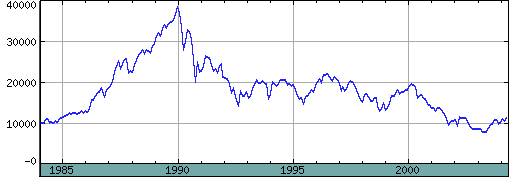
Compare
the US situation with that in Japan, where the equity
bubble peaked in 1989. In Japan, as in the US today,
Government policies were put in place to prevent equities
from dropping to their proper level. Interest rates
were kept artificially low. So what happened in Japan?
|
|
|
20
years of the Nikkei 225 index |
Sometimes,
they don't come back. |
| 2004-02-18
- Enron's Skilling indicted |
|
Jeff
Skilling, Enron's former CEO, was indicted
today. Finally. While
there are apologists for Skilling, as CEO, he knew,
or should have known, that his company was a Ponzi scheme.
Will
Ken Lay be indicted? That gets close to Bush, and just
in time for election season. |
| 2004-02-12
- Enron Treasurer in prison |
|
Federal
Bureau of Prisons Inmate Locator
Inmate Information for BEN F GLISAN |
 |
Inmate Register Number |
20293-179 |
|
Name |
BEN
F GLISAN |
| Age |
38 |
| Race |
WHITE |
| Sex
|
MALE |
| Projected
Release Date |
1/17/2008 |
| Location |
HOUSTON
FDC |
|
After
much delay, the first Enron executive is safely
behind bars.
Next
to go to jail will be former Enron CFO Andrew
Fastow. Fastow, although he pled guilty, is currently
"out on bail awaiting sentencing" until
April. He's "cooperating with prosecutors"
to get some time knocked off his sentence. As
a result, former
Enron CEO Jeff Skilling is scheduled
to be indicted next week. |
|
2003
|
| 2003-12-06
- Job losses continue |
|
The
current US "recovery" doesn't include jobs.
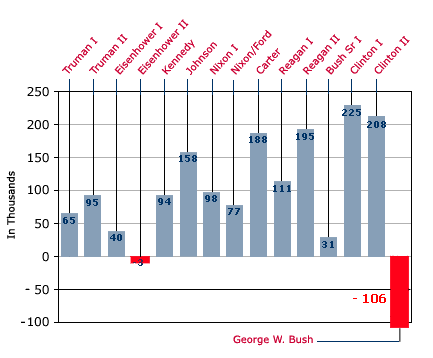 |
|
Job
gains/losses, by U.S. President
Source: U.S. Bureau of Labor Statistics, AFL-CIO |
Eighty
percent of new US jobs last month were in the low-paying
"temporary", "heath care and social assistance",
and "food services and accommodations" categories.
Manufacturing and engineering jobs continue to decline.
As the New
York Fed analyzes this psuedo-recovery, "The
job losses associated with cyclical shocks are temporary:
at the end of the recession, industries rebound and
laid off workers are recalled to their old firms or
readily find comparable employment with another firm.
Job losses that stem from structural changes are permanent." |
| 2003-10-10
- Enron's chief accounting officer flips |
|
Wesley
H. Colwell, the former chief accounting officer of Enron
North America, has cut
a deal to escape prosecution.
He agreed to "continue to cooperate with on-going
investigations into Enron Corp. by the Securities and
Exchange Commission and the U.S. Department of Justice
Enron Task Force".
Colwell,
as chief inside accountant, appears to have been responsible
for the mechanics of Enron fake earnings inflation.
He should know where all the bodies are buried. Colwell
will presumably appear as a witness for the prosecution
in the Fastow case. The main question at this point
is whether Cowell has given enough information to prosecute
Skilling and Lay. |
| 2003-09-23
- Enron update: more indictments |
|
Three
senior Merrill employees involved in Enron's earnings
deception were indicted
last week. Merrill, once a highly respected Wall Street
brokerage, was directly involved in assisting Enron's
accounting frauds.While Merrill previously denied wrongdoing,
they have now entered into a cooperation agreement with
the FBI. |
| 2003-09-10
- Enron update: guilty, guilty, guilty |
|
Former
Enron treasurer Ben Glisan pled guilty today and was
sentenced to five years in the pen. Glisan admitted
that "he and others engaged in a conspiracy to
manipulate artificially Enron's financial statements".
This follows the conviction of Enron exec Michael Kopper.
Next up, Enron CFO Andrew Fastow, scheduled for trial
next spring on charges that could lead to a life sentence.
Still being investigated are former CEOs Kenneth Lay
and Jeff Skilling. The known connection between Lay
and Bush is being avoided, but if Lay goes down, he
might take Bush down with him.
Secret
hearings in the Fastow case indicate activity on
that front. Keep watching. |
| 2003-06-30
- The post-bubble bubble |
|
Why
hasn't all the air come out of the market bubble yet?
In the June 28th issue of The Economist, (p. 25), we
read this: "The
Fed, it seems, will stop at nothing to keep the post-bubble
economy afloat. ... After playing an key role in nurturing
the equity bubble of the late 1990s by holding down
interest rates, it has since propped up the economy
by furthering first a property bubble and then a bond
bubble." This
article is worth a close read.
The
Fed can do no more. Interest rates are almost zero.
What
we're seeing looks like a replay of the Japan of the
1990s. The Nikkei peaked in 1989, around 39000, before
Japan's crash in that year. Government policy was manipulated
to keep the market up. Interest rates went to near zero.
It didn't help. A decade later, the Nikkei is around
9100. |
| 2003-06-26
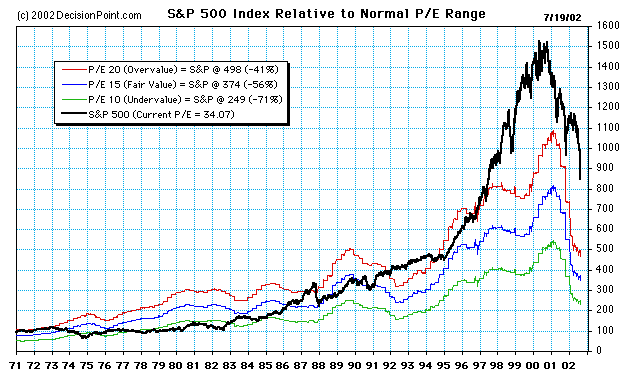
- The bottom is still a long way down |
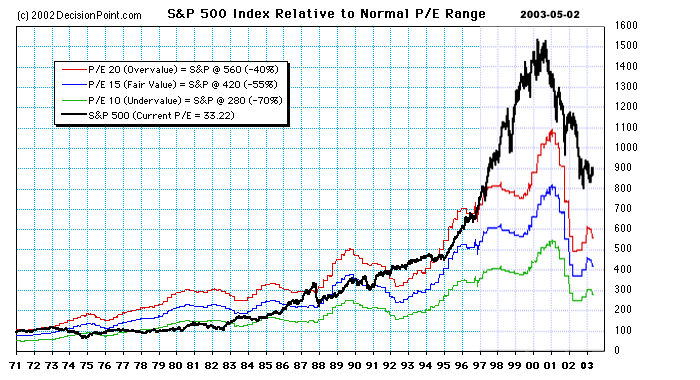
| There's
loose talk going around that the depression in the market
is over. Wrong. Stock prices are still far too high for
earnings
We
last showed this DecisionPoint
chart in July 2002. A year later, the P/E ratio for
the S&P 500 is 33.22, down from 34.07 last summer.
Normal P/E ratios for the entire market are between
10 and 20.Whenever the black line is above the red line,
stocks are overpriced.
Over
time, earnings usually increase, but that's a slow process.
It would take a decade of ordinary earnings growth to
bring the red line up to meet the black line. The earnings
bubble of 2000-2001 was just that, a bubble. Some of
those earnings were faked, as we now well know.
Yes,
the momentum investors are back, fueled by the usual
televised hype. That's gambling, not investing. |
| 2003-05-01
- More Enron indictments |
|
More
indictments
in the Enron case today. Money laundering, wire fraud,
bank fraud, filing false tax returns, insider trading,
falsification of records... Fastow, of course, was indicted
again, along with six others. From the indictment:
"Between at least 1996 and November 2001, FASTOW,
GLISAN, BOYLE and other devised various schemes to defraud
Enron and its shareholders, the investing public, the
SEC, and others. ... fradulent manipulation of Enron's
financial results ... manipulation of the share price
... appearance of business skill ... personal enrichment
... filing false and misleading statements with the
SEC ... false and misleading public statements".
On
August 24, 2001, Ken Lay said this in a Business
Week interview: "There are absolutely no
problems that had anything to do with Jeff's departure.
There are no accounting issues, no trading issues, no
reserve issues, no previously unknown problem issues.
The company is probably in the strongest and best shape
that it has ever been in." Less than four months
later Enron was bankrupt. So far, Ken Lay and Jeff Skilling
haven't been charged, but that may yet happen. |
| 2003-04-26
- TV Turnoff Week |
|
This
is National TV Turnoff
Week. While that event may seem an exercise in futility,
Downside readers should recognize that heavy television
viewing is negatively correlated with income.
The
scandals continue. Frank Quattrone, who put Credit Suisse
First Boston into the overhyped IPO business, was arrested
this week for ordering the shredding of incriminating
documents. WorldCom's former CFO, Scott Sullivan, was
indicted
for bank fraud, in addition to previous indictments
related to WorldCom's bankruptcy. Further indictments
in the Enron cases are expected next week. It's not
over. |
| 2003-04-14
- Downside at 3 |
Three
years ago today, we started Downside. We had this to say:
|
2000-04-14
- Today begins the Second Great Depression
All
bubbles burst. This one just did. The great Internet
bubble is over.
First we had Internet companies with no profits.
Then we had Internet companies with no revenue.
Towards the end, we saw attempts to take public
Internet companies with no operations. It had
to end, and it just did. This is healthy. It's
not the end of the Internet, just the end of the
stupidity. Now we have to get through a return
to reality. "Reality", in this context, is a return
to historical P/E ratios, in the 6 to 20 range.
What about the companies with no earnings? Uh
oh. Losing money on every sale and making it up
on volume is a joke, not a business plan. |
We
said that Internet stocks were insanely overpriced. We
said that the market as a whole was 2 to 3 times higher
than it should be. We said that the bubble would burst
sooner, rather than later. We were hated and derided as
pessimists. We were right.
In
retrospect, we weren't pessimistic enough. We didn't
realize the extent to which even "value" stocks
were overpriced. We didn't see the extent of accounting
fraud. We didn't anticipate the biggest bankruptcies
in history.
In the First Great Depression, the financial community
was in denial for about three years. We are now three
years into the Second Great Depression. It's just started
to be accepted that things won't get better any time
soon. Reality is finally sinking in.
What
ended the First Great Depression? Not the war, but the
technical advancements that came from it. No new technology
is poised to have a similar impact in the next few years.
We may be stuck until some truly new ideas come along.
|
| 2003-03-23
- The first casualty of war |
| ...
is truth. News reporting on this war is rather tightly
controlled. Note that most lead stories are based on official
statements by one side or the other. What's not being
said is perhaps more important than what is being said.
Over the next few weeks, as reporters start gathering
information on their own, the quality of the reporting
will improve. For now, a degree of skepticism should be
maintained. The fog of war is quite real. |
| 2003-03-13
- Spam |
|
Spam with a return address on "downside.com",
advertising a pornography site, did not come from us.
We are in the process of tracing the forger via their
payment service.
Downside®
is a registered trademark. |
| 2003-03-08
- Don't bunch up |
|
On
the eve of war, the traditional infantry advice, "don't
bunch up" is appropriate. If
Iraq does have weapons of mass destruction, we're about
to find out the hard way. Don't assume that a war with
Iraq will be entirely "over there". It's a
good time to get out of the obvious target areas, like
lower Manhattan and downtown Washington. Massive destruction
is unlikely, but substantial disruption is quite possible.
Last time, the war was about pushing Iraq out of Kuwait.
Iraq's survival as a country wasn't threatened. This
time, it is. There's no reason for Iraq to hold back
if the US bombs Baghdad.
From
a financial perspective, it would be prudent to assume
that the financial system might go down for a few days
or weeks. Any option, derivative or hedge which requires
functioning markets and liquidity is risky in this environment.
Hard
copies of account statements will become important if
key systems are disrupted. Be prepared for ATM and credit
card processing outages.
It
might be a short, victorious war. War may be avoided.
Or not. Better safe than sorry. |
| 2003-03-02
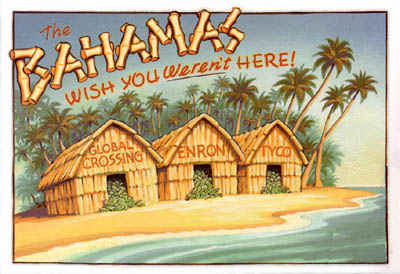
- Where are they now? |
|
Moving
to tax havens didn't help those companies. They're all
bankrupt. Excessive mucking about with the financial structure
seldom bodes well for the stockholders, although management
may benefit. |
| 2003-02-12
- On becoming the conventional wisdom |
|
CNN
now sounds gloomier than we do. But for the wrong
reasons. Bear in mind that P/E ratios are still
far too high by historical standards. The bubble still
hasn't fully deflated. It may take several more years,
perhaps longer, to reach the bottom. In the first great
depression, P/E ratios bottomed out around 10. A comparable
ratio today would put the S&P 500 around 250, down
from 818 today. The climb back took decades last time.
That's a pessimistic estimate, but it might not be wrong.
One
could take the position that the bottom will only see
P/E ratios at a historically high value of 20, that
earnings will recover in the near term, and that none
of the current and upcoming wars will badly hurt the
US. That yields an S&P 500 value of maybe 600-700,
still well below current values, for a very optimistic
set of assumptions. |
|
| 2002
Q4 |
| 2002-12-25
- Bah. Humbug! |
|
The stock
market has now had three down years in a row. Only twice in
the last century has that happened, most recently in the early
1940s, and, of course in the first Great Depression. Yet price/earnings
ratios remain high by historical standards. The bottom is
still a long way down from here.
Retail
was slow this season, which shouldn't surprise anybody.
Much
has been made of increased productivity in recent months.
That's not an indicator of economic growth. Productivity rises
in a recession, simply because the least efficient producers
and plants shut down first.
We have
a war with Iraq coming up, al-Queda is still active, and the
Administration is putting in comprehensive Big Brother systems.
Happy
holidays. |
| 2002-12-08
- Insiders vs. stockholders |
|
The San
Jose Mercury News, as their top story today, today provided
a list of 40 companies whose top management made hundreds
of millions of dollars selling their stock before the company
tanked. The top five:
This
is marginally legal under current US law, but stockholder
lawsuits are definitely indicated. The presence of any officer
or director of any of those companies in management of another
company should be regarded as a sell signal. In some European
countries, those people would be barred by law from a management
role in a public company for life.
As we've
been saying for some time, the current system of compensation
by short-term stock options rewards management for volatility,
not long-term profitability. We need longer holding periods,
much longer ones. Management must be at risk of loss if the
company tanks.
|
| 2002-12-07
- Bush fires Lawrence Lindsey |
|
President
Bush has fired Lawrence Lindsey, his chief economic adviser
and former Enron director. Better late than never.
Meanwhile,
United Airlines is expected to go bankrupt tomorrow. Most
major analysts issued "sell" recommendations a month
or two ago, a contrast to the dot-com era, when we'd see "buy'
recommendations right up to the bankruptcy. Happy-talk analysis
seems to be out of fashion. |
| 2002-11-17
- Scandal updates |
|
Enron's
Fastow was arrested a few weeks ago, but pled not guilty.
It may take a while longer to get to Ken Lay.
It's
now come out that Williams Energy shut down power plants during
California's energy crisis to drive up prices.
Pitt
and Webster are gone from the SEC, but haven't yet been replaced.
It matters who replaces them. If it's somebody with a history
of putting crooks in jail, the mess may get cleaned up. If
not, the problems will continue. |
| 2002-10-20
- Enron - how high will the prosecutions go? |
|
The Enron
investigation continues to move up the food chain. The prosecutors
are working this like an organized crime case, which it is.
First, Enron exec Michael Kopper was arrested in September.
He provided information about Andrew Fastow, Kopper's boss
and the architect of Enron's offshore entities for creating
fake earnings. Fastow was arrested a few weeks ago. In turn,
Fastow can probably give up Ken Lay and some of Enron's board
members. They had to know what was going on; that's clear
from the board minutes that have been published.
But will
it stop there? Many Bush Administration people had strong
ties to Enron. Vice President Cheney's connection, of course,
is well known. Some less-prominent officials are now trying
to hide their Enron ties. The U.S. Trade Representative, Robert
B. Zoellick, has removed his connection with Enron from his
official
biography. (Compare this
archived version from 2001. Note the disappearance of
the sentence "Mr. Zoellick was a board member of Alliance
Capital, Said Holdings, and Jones Intercable, and served on
the Advisory Council of Enron Corporation.") Lawrence
Lindsey, Assistant to the President for Economic Policy, also
doesn't mention in his official
biography that he was a director
of Enron. Mr. Lindsey is the Administrations's leading
advocate of tax cuts as a solution to most economic problems. |
| 2002
Q3 |
| 2002-09-18
- Tyco CEO headed for Ryker's Island Jail |
|
Tyco's
former CEO, L. Dennis Kozlowski, goes to jail tomorrow. He
can't make the $10 million bail; his assets have been frozen
as ill-gotten gains of criminal activity. Kozlowski is the
first CEO of a Fortune 500 company to be jailed for business
crimes in recent years. More will follow.
Some
General Electric top executives were jailed for price-fixing
in the 1960s, which had a salutary effect on the rest of the
CEO community that lasted a decade. A few CEO convictions
with long jail sentences will go a long way to turn things
around.
In other
news, documents obtained from Enron litigation now indicate
that Enron had a larger role in California's power crisis
than previously believed. That scandal may be moving to the
front burner.
|
| 2002-09-16
- So many frauds, so little time |
|
That's
just a sampling of recent news stories. There's more to this
mess.
Recommended
reading:
How Companies Lie,
a bitter little book that's not wrong. Valuable insights
into the extent of the problem.
Anatomy of Greed,
a fun read from an Enron insider.
DownTime, a Guide to Federal
Incarceration - suggested as a gift for your least favorite
CEO.
|
| 2002-08-21
- Enron exec pleads guilty, agrees to cooperate with investigation |
|
Today,
Michael Kopper, a former Enron financial executive, pled
guilty to conspiracy to commit wire fraud and conspiracy to
commit money laundering. Kopper agreed, as part of his
plea bargain, to cooperate with investigators. Kopper knew
where the bodies were buried; he helped Andrew Fastow, Enron's
former CFO, construct all those deceptive off-balance entities
Enron used to fake revenue. Note
Kopper's position: he's pled guilty, but the sentence will
be determined by how well he cooperates. This is standard
procedure in organized crime cases, but it's not common in
fraud cases. But then, this was organized crime.
Now
the rest of Enron's crooks will go down. Fastow, at least,
Ken Lay, probably. Maybe some Andersen people, too; Andersen
was in on the planning of those off-balance entities.
|
| 2002-08-01
- Criminal investigation of AOL Time Warner |
|
The Justice
Department has opened a criminal investigation of AOL
Time Warner. It appears likely that there were phony earnings
reports and fake deals designed to exaggerate revenue.
AOL
was already in trouble for bad financial reporting. The
company was fined $3.5 million back in 2000 for capitalizing
the cost of those ubiquitous AOL disks. AOL is under a cease-and-desist
order from the Securities and Exchange Commission. That apparently
wasn't a strong enough sanction to make management stop.
Who's
next? Probably the brokerage
firms and banks that made the Enron debacle possible.
|
| 2002-07-27
- Executive arrests expected in WorldCom case |
|
WorldCom
executives will be charged next week, reports the Wall
Street Journal. The former CFO, controller, and probably the
former CEO are to be charged with fraud. Now we're getting
somewhere. Arrests in all the major cases are needed to restore
confidence in the markets.
In many
of these big financial fraud cases, it's clear that there
was illegal activity in top management, but it's been hard
to tell from the outside who knew what when. The Justice Department
has been hesitant to indict executives without a "smoking
gun" clearly establishing individual guilt before the
indictment. But that's not required. Big financial frauds
are a form of organized crime, and should be treated as such.
|
| 2002-07-24
- First mass arrest of executives of a failed company |
| Five
members of Adelphia's former management team were arrested today
on federal fraud charges. Each was charged with conspiracy,
securities fraud, wire fraud, and bank fraud. A bit late, but
a step in the right direction. |
| 2002-07-22
- Where's the bottom? A long, long way down. |
|
We've
been harping on this for a while now, but it's worth saying
again: The market is still overvalued. The history of P/E
ratios shows just how overvalued the market remains. Even
with the dot-coms gone and all the big bankruptcies, stock
prices remain far too high. P/E ratios remain higher, far
higher, than they have ever been in the entire history of
the U.S. stock markets. The black line has to come down to
the neighborhood of the blue line.
Chart courtesy of Decisionpoint.com.
|
| 2002-07-20
- WorldCom bankruptcy |
|
WorldCom
to declare bankruptcy Sunday.
This is the largest bankruptcy ever. There's not much more
to say.
Markets
are still far too high based on fundamentals. See "Stop
this Dream", in the Economist for July 20, 2002.
We've been saying that here for some time, but now it's a
mainstream position. "The postwar average P/E for the
S&P 500 is 15; now it is 40", writes the Economist.
So the S&P 500 needs to drop to around 340 (from 848 today)
just to get back to the postwar average. That's an average;
at times P/E ratios are lower. There are periods when prices
are so low that some companies sell below book value. When
bubbles collapse, they usually collapse all the way. So the
market bottom may be below that average. Again, the bottom
is a long way down.
|
| 2002-07-14
- "This is Fraud 101". |
|
"This
is way beyond aggressive accounting. This is Fraud 101, you
know, basic illegal conduct." - Congressman Tauzin
on WorldCom. Still no arrests, an indication that the Administration's
"get-tough" policy remains cosmetic.
|
| 2002-07-10
- Faith-based investing |
|
"All
investment is an act of faith, and faith is earned by integrity."
- from a recent Bush speech. When
the integrity goes away, so does the investment. But speeches
won't help. Tough audits and long jail sentences will. There
haven't been any CEO arrests yet. The "crackdown"
is, thus far, not seriously hurting the people who perpetrated
these frauds.
We're
not seeing companies selling below book value yet. P/E ratios
are still too high. We're nowhere near the bottom.
Remember,
the true value of a stock is the present value of its future
dividends. Anything above that is based on the assumption
that there's a "greater fool" willing to buy the
stock. Much of the time, such fools exist. There's thus a
sizable "optimism premium" in many markets. When
that optimism premium goes away, we're back to the basics
- assets and dividends. We are seeing that now.
|
| Q2
2002 |
| 2002-06-28
- The Worldcom mess |
|
More
phony numbers. Another collapse. Another Andersen audit client,
too.
We predicted
the dot-com collapse. That was easy. The dot-coms had terrible,
but mostly honest, numbers, and ordinary fundamental analysis
worked well on them. Now we're seeing companies go under that
had reported good numbers, but were lying. Reading the financial
statements doesn't help if they're bogus.
There
is no investment without honest reporting. There is only speculation.
In the current reporting environment, one could argue that
pension funds and others with fiduciary responsibilities shouldn't
be in stocks at all.
|
| 2002-06-24
- Where's the bottom? |
 |
|
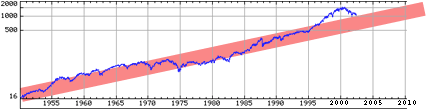
Fifty
years of the Standard and Poor 500 Index
|
There's
the bubble. For half a century, through boom and recession,
the S&P 500 (the broadest of the widely-followed indices)
stayed in a trading range around a long term trend. Until
the late 1990s. This gives a sense of how broad-based the
"irrational exuberance" was. It wasn't all tech
stocks.
The market
top of 2000 was about fifteen years too early. And we're still
well above the historical trend, even after the collapse.
The basic
fundamentals also indicate that the market as a whole is still
far overvalued. Historical price/earnings ratios over the
decades average around 16. The Economist says that U.S. companies
are averaging a P/E of around 40 now.
The bottom
is a long way down from here.
|
| 2002-06-22
- Rite Aid CEO indicted |
|
The Washington
Post reports that the former chairman and chief executive
of Rite Aid Corp was indicted on Federal charges of inflating
the company's earnings, destroying evidence, tampering with
a witness and secretly moving millions in company funds to
a personal side business. Rite Aid stock, around 50 at its
peak two and a half years ago, is now down to 3. Yet again,
we see how criminal activity led to the collapse.
|
| 2002-06-15
- Andersen guilty |
|
Arthur
Andersen LLP was convicted of obstruction of justice today.
The accounting firm that made the Enron mess possible will
soon be history. But the individuals responsible remain at
large. None of the principals of Enron or Andersen are in
jail. Some of them should be.
Jail
is a highly effective deterrent against corporate crime. Executives
are good at insulating themselves from losses at their companies.
It takes prison sentences to get the message through that
society will not tolerate illegal acts by management.
|
| 2002-06-09
- The coming wars |
|
The
current adminstration proposes to start wars. "The
Bush administration is developing a new strategic doctrine
that moves away from the Cold War pillars of containment and
deterrence toward a policy that supports preemptive attacks
against terrorists and hostile states with chemical, biological
or nuclear weapons." This is a great change in American
foreign policy. Never before has such an aggressive policy
been proposed at the Presidential level.
|
| 2002-05-30
- National Coverup Month |
|
This
was a big month for failed coverups. The big ones:
Investigations
continue
in the Wall Street recommendations scam, mentioned last month.Merrill
Lynch settled for $100 million.
Reports
of inflated earnings by major companies continue to surface.
Boeing and Global Crossing are some of the most prominent,
but the list is long. The proposed reform measures are probably
insufficient to get honest numbers. Accounting firms can still
consult for the firms they audit, and brokerage houses can
still offer analysis of companies whose stock they sell. Sham
transactions that inflate earnings are still permitted. The
problem has not been fixed.
|
| 2002-04-28
- How the dot-com IPO boom was fueled by a huge scam |
|
The truth
is starting to come out. Much of the dot-com boom was a scam,
fueled by corrupt investment banks who, in the words of the
San Jose Mercury News, took "kickbacks
from preferred clients in exchange for big allocations of
shares in coveted Internet IPOs." The SEC is investigating
Morgan Staley, Goldman Sachs, J.P. Morgan, Robertson Stephens,
and others for "laddering",
a market manipulation scheme designed to inflate stock prices
immediately after the IPO. This may turn out to be the biggest
"pump
and dump" scheme of all time.
New York
State Attorney General Elliot Spitzer is widening his investigation.
The Securities
and Exchange Commission, the New York Stock Exchange, the
National Association of Securities Dealers, the North American
Securities Administrators Association, and a number of states
are now
investigating. This
could be bigger than Enron and Andersen.
Some
of the companies involved, such as VA Linux, were mentioned
on our Deathwatch or Misery
Row. Those first-day runups were suspicious at the time.
Now it's becoming clear what was going on.
|
| 2002-04-10
- Merrill Lynch stock ratings phony |
|
New
York State Attorney General investigation of Merrill Lynch
"As
part of a quid pro quo between the firm and its investment
banking clients, Merrill Lynch analysts skewed stock ratings,
giving favorable coverage to preferred clients, even when
those stocks were dubious investments. This problem and other
conflicts of interest are revealed by internal e-mail communications
obtained during the investigation by the Attorney General’s
office. These communications show analysts privately disparaging
companies while publicly recommending their stocks. For example,
one analyst made highly disparaging remarks about the management
of an Internet company and called the company's stock "a piece
of junk," yet gave the company, which was a major investment
banking client, the firm's highest stock rating."
"This
was a shocking betrayal of trust by one of Wall Street’s most
trusted names." - Elliot Spitzer, New York State Attorney
General.
Which
stocks received phony ratings? The court
affidavit names names. Many of these were on Downside's
Deathwatch.
"Thus,
as previously covered stocks such as Pets.com, Mypoints.com,
Quokka Sports, Webvan, iVillage, Buy.com, 24/7 Media, E-Toys,
Internet Capital Group, and InfoSpace plummeted, sometimes
all the way to zero, retail customers and the investing public
were never advised to sell."
This
may be just the beginning. Subpoenas have been issued to other
securities firms.
|
| |
Q1 2002
| 2002-03-14
- Andersen goes down |
|
Grand
Jury Indictment: THE CHARGE: OBSTRUCTION OF JUSTICE
"On or about and between October 10, 2001, and
November 9, 2001, ... ANDERSEN, through its partners
and others, did knowingly, intentionally, and corruptly
persuade and attempt to persuade other persons, to wit:
ANDERSEN employees, with intent to cause and induce
such persons to (a) withhold records, documents, and
other objects from official proceedings, namely: regulatory
and criminal proceedings and investigations, and (b)
alter, destroy, mutilate, and conceal objects with intent
to impair the objects' integrity and availability for
use in such official proceedings. (Title 18, United
States Code, Sections 1512(b)(2) and 3551 et. seq.)"
"The
shredder at the ANDERSEN office in the Enron building
was used virtually constantly, and, to handle the overload,
dozens of large trunks filled with Enron documents were
sent to ANDERSEN's main Houston office to be shredded."
This
speaks for itself.
|
| 2002-02-04
- Our god can lick your god - film at 11. |
|
Religious
wars are picking up. India is having religious massacres
on a scale not seen since the last days of the Raj.
Israel is shelling Palestinian areas. The Afghanistan
war, which seemed to be over, is heating up. We have
the big ones, the U.S. vs. Iraq and India vs. Pakistan,
as real, near-term possibilities. And that's ignoring
Bush's
"axis
of evil" speech, which adds Iran and North
Korea to the enemies list.
The
big question is whether these separate wars will combine
into a big one. It could happen.
It's
worth remembering that this was bin Laden's stated goal.
|
| 2002-01-22
- Another major bankruptcy |
|
Kmart
went bankrupt today. Largest retail bankruptcy ever,
at $17 billion. The
US is "overstored"; there are far more retail
outlets than are needed. Especially during a recession.
Some of them have got to go.
The
dot-coms are long gone, yet the collapse continues.
The companies that are going bankrupt now are ones that
appeared in reasonably conservative portfolios a year
or two ago. The effect on pension funds could be substantial.
|
| 2002-01-12
- Largest bankruptcies of 2001 |
| Company
|
Bankruptcy
Date |
Total
Assets
Pre-Bankruptcy |
| Enron
Corp. |
2001-12-02
|
$63,392,000,000 |
| Pacific
Gas and Electric Co. |
2001-04-06
|
$21,470,000,000 |
| FINOVA
Group, Inc., (The) |
2001-03-07
|
$14,050,000,000 |
| Reliance
Group Holdings, Inc. |
2001-06-12
|
$12,598,000,000 |
| Federal-Mogul
Corp. |
2001-10-01
|
$10,150,000,000 |
Source:
BankruptcyData
Enron
appears to be the largest corporate bankruptcy of all
time, assuming they actually had $63 billion of assets.
There's some question as to whether the asset figure
for Enron is any more meaningful than the rest
of the numbers in their 10-Q. Press reports indicate
considerable "creative accounting", if not
outright fraud.
There
is talk of a crackdown on auditing firms. Believe it
only if Andersen, Inc. is forced to exit the accounting
profession or some of its principals do jail time.
Note
that none of the companies listed were "dot-coms".
Although dot-coms saw declines in market cap on that
scale, the dot-coms never had enough assets to make
this list.
|
| 2002-01-06
- New features for 2002 |
|
Downside
now offers a daily update of the latest 10-K, 10-Q,
and related filings with the U.S. Securities and Exchange
Commission. Today's new filings appear at the left of
this page. Click on any company name shown for the latest
balance sheet and income statement.
The
search box at the top returns the income statement and
balance sheet for any company filing with the SEC.
The
new, calmer, color scheme helps to reduce stress when
reading financial statements of companies in trouble.
|
| |
|
Q4 2001
|
| 12.31.2001
- € day |
|
Today Europe switches to a common currency. While
the exchange rates between the European currencies
have been locked together for a year, and accounting
has been in Euros for some months, today is the
practical, and psychological, moment at which
the national currencies disappear. Some of the
national paper currencies do have to be exchanged
within a limited time, so if you have a cash hoard
in some European currency, it's time to convert.
|
|
| 12.27.2001
- Instant Financials |
|
Try our new Financial Statement Search. Enter
a company name or NASDAQ ticker symbol in the
box at the top of the page. We look up the latest
balance sheet and income statement from the company's
SEC filings. Updated directly from the SEC database.
The financial extraction system is under development.
Please let
us know of any problems.
This
is a free service of Downside, offered for casual
use. If you need high-volume access to this data,
please contact us.
|
|
| 12.25.2001
- Bah, Humbug! |
|
Holiday shopping is over. We now return to our
regularly scheduled depression.
We
have two major wars coming up: India vs. Pakistan,
and U.S. vs. Iraq. What happens in 2002 will depend
more on whether those two are avoided than on
any economic factors. We're still in a period
where politics trumps economics.
|
|
| 11.28.2001
- The Internet Depression |
|
"The
Internet Depression", by Michael Mandel,
is the first good analysis we've seen of the aftermath
of the Internet bubble. It's by someone who saw
it coming (the previous hardcover edition, from
mid-2000, was titled "The Coming Internet
Depression"), so he has credibility. A key
point is that there's no Next Big Thing on the
near-term horizon to get the high-tech portion
of the economy out of the tank. He's probably
right. Recommended reading.
|
|
| 11.26.2001
- U.S. officially in a recession |
|
Now it's official. The National
Bureau of Economic Research announced today
that the U.S. recession began back in March, 2001.
These official announcements of recessions trail
reality by at least six months: "The Bureau
waits until the data show whether or not a decline
is large enough to qualify as a recession before
declaring that a turning point in the economy
is a true peak marking the onset of a recession."
This announcement shouldn't surprise anybody
who's been paying attention.
|
|
| 11.04.2001
- Wars with non-state actors |
|
In the post Cold War era, most wars so far have
involved parties other than nation-states. The
developed world has a hard time dealing with such
wars. We recommend reading USMC
Doctrinal Publication 3, "Expeditionary Operations"
which
was written by people who deal with small, messy
wars on a daily basis. Issued in 1999, "Expeditionary
Operations" outlines the post-Cold War situation
in brutal clarity: "While threats to national
security may have decreased in order of magnitude,
they have increased in number, frequency, and
variety. These lesser threats have proven difficult
to ignore. The main point of this discussion is
to point out that the post-Cold War geopolitical
situation has fundamentally altered the nature
and scope of future military conflicts. This situation
requires a diverse range of military methods and
capabilities for effective response. Far from
creating a new world order, the end of the Cold
War has led to what former United Nations Secretary-General
Perez de Cuellar has described as the new
anarchy." Chapter I of "Expeditionary
Forces" provides more insight into the current
situation than most of the talking heads on TV
today.
Despite
the war, it's important to bear in mind that the
current economic troubles stem more from the collapse
of the bubble than the external threat. The dot-com
collapse alone erased more than $1.7 trillion
in shareholder value. The attacks on the U.S.
did far less financial damage.
|
|
|
Q3 2001
|
| 9.21.2001
- Crusading |
|
In
recent years, economics has driven U.S. politics.
Now, politics is driving economics. Worse, to
some extent religion is driving politics. On both
sides. Historically this leads to bad political
decisions. The
history of the Crusades is relevant. From
the call for a crusade by Pope Urban II in 1095
AD, through three bloody but indecisive Crusades,
until the peace agreement between Richard the
Lion-Heart and Saladin in 1192, almost a century
elapsed. And that agreement didn't hold; there
were four more Crusades, the last ending in 1291
AD. The Crusades were two centuries of intermittent,
indecisive bloodshed.
There's
a good reason that successful modern democracies
are secular states.
|
|
| 9.18.2001
- Overreaction |
|
Fundamentals
haven't changed substantially in the last week.
All that's happening is that the air left over
from the overinflated boom is coming out faster
than before. Stocks are overpriced when they're
valued at more than the present value of their
future dividends, remember. All else is based
on the assumption there's a "greater fool"
out there. We won't have many of those around
for a while.
Airline
lobbyists are calling for a federal bailout of
the airline industry. That's corporate welfare,
not disaster recovery.
|
|
| 9.12.2001
- This is a disaster. But it's not a financial disaster. |
|
Bear
in mind that the events of the last two days destroyed
far less dollar value than the dot-com collapse.
This will not have a major, direct economic effect.
The political and social fallout, however, will
be significant.
We're
entering a serious, perhaps grim, period. Substance
will matter more than style. We now have a tough-minded
decade ahead, like the 1950s. The 1950s were a
period of progress, but with a repressive tinge.
We may see both progress and repression again.
We
may, in time, look back on the last 20-30 years
as a golden age.
|
|
| 8.31.2001
- The world is in recession |
|
The
Economist (August 25-31, p. 22) now agrees
we're in a recession. Worldwide, not just the
US. Their outlook is gloomy: "Perhaps
the biggest downside risk is that American share
prices still look overvalued." The
Dow fell through 10,000 this week. The US government
budget surplus is gone. The irrational exuberance
is over.
Forbes
reports signs of a crash in housing. (Commercial
real estate is already at the see-through office
building stage.) The big run-up in house prices
of the late 1990s is starting to run down. It's
not clear yet how severe this will be.
|
|
| 7.17.2001
- Doerr takes it back |
|
John
Doerr has publicly taken back his widely quoted
remark about this bubble being the "largest
single legal creation of wealth in history."
A bit late. Hype is not wealth creation. Wealth
creation requires profits.
Some
of the companies on Deathwatch have, in the last
few weeks, reached the final stage of collapse
- the liquidation auction. It's a great time to
buy slightly used office furniture.
|
|
|
Q2 2001
|
| 6.24.2001
- Deathwatch cleanup |
|
Deathwatch
remains as a historical record of the dot-com
bubble. We've now using NASDAQ charts instead
of Stockmaster charts, which changes the appearance.
NASDAQ charts, unfortunately, are not available
once trading in a stock has ceased, so when a
company is gone, its chart goes blank. This is
a lack; it's important to remember the dead and
not repeat their mistakes.
The predictions remain frozen as of January 1,
2001.
A
new, improved Deathwatch is coming. Watch for
further announcements.
|
|
| 6.17.2001
- Summer power crisis |
|
|
When
the red line reaches the green line, California
goes dark.
This
is a nice illustration of the nature and
limitations of markets. Markets don't reach
equilibrium; they vary around it. In a market
like electricity, where there's no inventory
and adding capacity takes years, the variations
are huge. There's no surprise here. This
is how systems with negative feedback and
delay behave. Utilities were run on a regulated
rate-of-return basis for a century, damping
out volatility at some cost in excess capacity,
until some politicians forgot this.
Live
data at left from the California
Independent System Operator.
|
|
|
| 4.14.2001
- One year ago on Downside |
|
Downside
is one year old today. Here's what we said a year
ago when we started Downside:
"All
bubbles burst. This one just did. The great
Internet bubble is over.
First
we had Internet companies with no profits. Then
we had Internet companies with no revenue. Towards
the end, we saw attempts to take public Internet
companies with no operations. It had to end,
and it just did.
This
is healthy. It's not the end of the Internet,
just the end of the stupidity. Now we have to
get through a return to reality. "Reality",
in this context, is a return to historical P/E
ratios, in the 6 to 20 range. What about the
companies with no earnings? Uh oh. Losing money
on every sale and making it up on volume is
a joke, not a business plan."
Any
questions?.
|
|
| 4.12.2001
- "101 dumbest moments in E-business history" |
|
"eCompany
Now" has a list of the 101
dumbest moments in E-business history. Items
on the list go back to 1997. Of course, it would
have been more useful if these items had been
reported as dumb before the bubble collapsed.
We
have removed "Dot Com Failures" from
the list of resources in the toolbar at the left
because that site has disappeared. Also,
"Stock Detective" hasn't been updated
much since its acquisition by FinancialWeb.
Only
4846 NASDAQ symbols today. The failed dot-coms
are being flushed out of the system.
|
|
| 4.7.2001
- Aftermath of a bubble |
|
With
the NASDAQ at 1720, and no bottom in sight, it's
worth looking back at other bear markets. In the
Great Depression of the 1930s, it took 25 years,
(and World War II) before the DJIA again reached
its 1929 high. The Nikkei
has been below its 1989 peak for over a decade,
and is still down over 60% from that high. That's
what the aftermath of a bubble looks like. Recovery
takes decades, not months.
There
are only 4864 NASDAQ symbols today, down from
5021 at the beginning of the year. The shakeout
continues.
|
|
|
Q1 2001
|
| 3.13.2001
- NASDAQ index below 2000 |
|
The
NASDAQ index is down 62% from its all-time high.
The
NASDAQ's home
page says today: "A good company before
yesterday's selloff is probably a good company
today--but it pays to diversify. Money market
and certificate of deposit accounts remain safe,
profitable havens."
Better
late than never.
We're
freezing our Deathwatch
predictions at where they were on January
1, 2001. This lets everyone see how the bubble
plays out. The charts and notes will continue
to be updated as the collapses, bankruptcies,
mergers, and delistings continue.
|
|
| 2.15.2001
- NASDAQ below 5000 symbols |
|
Lately
we've been monitoring the number of ticker symbols
on the NASDAQ. It's at 4952 today, down from 5021
at the beginning of the year. That's a big drop
for six weeks. Many more will follow. Companies
with stock prices below 1 are kicked down to the
pink sheets, in accordance with the NASDAQ rules,
and there are all too many of those among the
one-time high flyers.
Many
of those companies should never have been listed
on a major exchange.
|
|
| 1.10.2001
- Corporate whining about Deathwatch |
|
We've
been hearing complaints recently from some companies
mentioned in Deathwatch. The main complaint is
that Deathwatch is harsh on companies writing
off big non-cash items. On request, we'll put
a note on Deathwatch for companies where this
is an issue. But we're not going to adjust the
death date manually. Deathwatch is automated;
we don't make judgement calls about it. Income
is "Net Income" from the income statement;
cash is "Cash" from the balance sheet.
The death date is computed from those two numbers.
It's simplistic, but free of spin control.
The
loudest complainer's stock is down 98% over the
last year. Their stockholders have our sympathy.
|
|
|
Q4 2000
|
| 12.24.2000
- Time off for Xmas Eve? Bah! Humbug! |
|
The
EDGAR database at the U.S. Securities and Exchange
Commission is broken today. Both the forms search
engine and filing retrieval by known URL are failing.
Looking up Microsoft's
latest quarterly numbers returned "page
not found". The forms search engine can't
find General Motors, Microsoft, or Cisco. Not
good.
|
|
| 12.18.2000
- The Golden Life Raft - the rule change that made
the Internet bubble possible |
|
Until
the late 1990s, the Securities and Exchange Commission's
Rule 144 generally required that insiders hold
their stock for two years after an IPO. That rule
was changed on February 20, 1997 to allow insider
sales much sooner. The boom in dumb IPOs followed
shortly thereafter. Under the old rule, if the
company tanked months after the IPO, management,
and the venture capitalists, went down with the
ship. The new rule provides a "golden life
raft", allowing management and the VCs to
cash out and watch from safety while the ship
goes down without them.
It's
instructive to read the position
of the National Venture Capital Association,
the VC's trade association, when they were lobbying
for this change: "The NVCA supports a
further shortening of this holding period. This
further shortening would enable venture capital
funds to provide faster liquidity to fund investors,
thereby increasing their returns and attracting
more capital for investment in emerging growth
companies." This is financial-speak for
"let's party".
That
single rule change made the bubble possible. In
retrospect, making insider sales easier was terrible
public policy. The only people who benefit are
those doing IPOs that shouldn't have been done
at all.
|
|
| 12.11.2000
- Housekeeping and corrections |
-
Kanakaris Wireless (KKRS) is showing on
Deathwatch with the ticker symbol and chart
of Kana Corporation (KANA). The death date shown
applies to Kanakaris Wireless. This will be
fixed in the next update cycle.
- Salon's
latest 10-Q filing with the SEC contains inconsistent
data affecting Deathwatch. Salon has been informed.
We've added a note to Salon's entry on Deathwatch.
- The
charts on Deathwatch now cover 12 months instead
of 6, so you can see how overpriced Deathwatch
stocks were in their heyday.
|
|
| 12.9.2000
- This isn't the first time |
|
"When the going is good and new issues are
readily salable, stock offerings of no quality
at all make their appearance. They quickly find
buyers; their prices are often bid up enthusiastically
right after issuance to levels in relation to
assets and earnings that would put IBM, Xerox,
and Polaroid to shame. Wall Street takes this
madness in its stride, with no overt efforts by
anyone to call a halt before the inevitable collapse
in prices. (The SEC can't do much more than insist
on disclosure of information, about which the
speculative public couldn't care less, or announce
investigations and mild punitive actions of various
sorts after the letter of the law has been clearly
broken.) When many of these minuscule but grossly
inflated enterprises disappears from view, or
nearly so, it is all taken philosophically enough
as "part of the game." Everybody swears
off such inexcusable extravagances - until next
time." -- Benjamin Graham, in his The
Intelligent Investor, p. 216. Sound like the
current market? That was written in 1973. If this
surprises you, buy
the book; you need it.
|
|
| 12.5.2000
- Recent bankruptcies |
|
TSR
Wireless (privately held) went
bankrupt today, leaving several million pagers
without service. Chapter 7 liquidation. It's a
serious problem when an infrastructure company
goes under. Customers of companies in trouble
should be thinking about alternative providers.
SportsPrize Entertainment (JOCK)
also went bust. Their last words: "Game
Over! SportsPrize Entertainment has filed for
bankruptcy under Chapter 7 of the Federal Bankruptcy
Code. As a result Sportsprize.com has ceased to
operate, effective December 1, 2000. The echoes
of the fat lady's song linger in the stadium for
all of us who worked tirelessly for the company."
|
|
| 11.19.2000
- Q3 2000 reports are coming in, and they're not
good |
|
Deathwatch
has been updated with Q3 2000 numbers where available.
All companies should have filed their 10-Q for
Q3 with the SEC by now. Many on Deathwatch haven't.
We consider late reporting a strong sign of trouble.
We're
seeing fewer mergers and more outright collapses
this quarter. Taking on debt is also popular,
as are complicated deals involving preferred stock
and warrants. These all have the effect of reducing
stockholder equity. We're also seeing too many
"golden parachute" deals that benefit
the CEOs of dying companies. On the other side,
we're seeing more securities fraud litigation.
Where appropriate, we've noted these events on
Deathwatch.
Deathwatch's
predictions continue to be surprisingly accurate
for such a simple tool. Companies on Deathwatch
either refinance or die close to schedule. (Ziplink
ceased operations the day after its predicted
death date.) Very few get off Deathwatch by turning
profitable.
|
|
| 11.9.2000
- The 1.7 trillion dollar Internet bubble |
|
CNN
reports
that the 280 stocks on the Bloomberg Internet
index have fallen to $1.193 trillion currently
from $2.948 trillion at their respective peaks.
This is a loss of $1.755 trillion, most of which
occurred between March and September of this year.
And that includes the dot-coms that actually make
money. It's even worse for the turkeys. "(Investors
who bought dot-com stocks) were goaded by bullish
reports from sell-side securities analysts and
market forecasts from IT research firms, such
as IDC, Gartner and Forrester Research."
Yes. See our comments for 11.6.2000.
When
we started Downside on April 14, 2000, we said:
"All bubbles burst. This one just did. The
great Internet bubble is over." Any
questions?
Still,
the survivors aren't down to P/E ratios that make
them look attractive to a value investor.
|
|
| 11.8.2000
- Election day aftermath |
|
For
stocks on Deathwatch,
the election doesn't matter. For companies in
serious cash trouble, change in the political
environment won't be rapid enough to save them.
But expect some unrealistically optimistic press
releases once the election is decided.
The
US Senate is so closely divided we're probably
in for two years of gridlock.
|
|
| 11.6.2000
- No news is bad news |
|
Most
of what passes for "news" on online
stock services is pure hype. "News"
marked as coming from PR
Newswire or Business
Wire is a press release. Don't expect to see
any bad news from those sources. See Eric Moskowitz's
article "Propaganda Dot-Com" in the
Red Herring
for November 13th.. What Moskowitz doesn't point
out is how rare bad news is in that stream of
hype. Look up the "news" for some of
the companies on Deathwatch.
You'll find most failing companies issuing upbeat
press releases, sometimes right up to the day
the doors close. Sometimes the upbeat press releases
continue past downsizings, bankruptcies, and delistings.
The
SEC requires companies to file "significant
event" reports for disastrous events. These
are worth reading. Quite often, you'll find disastrous
"significant event" reports for which
the company issued no press release. They're filed
in EDGAR.
"News
is what someone doesn't want published. All else
is publicity".
|
|
| 11.2.2000
- Life after death |
|
Many
companies on Deathwatch
have outlived their death dates. The same cannot
be said of their stock. For almost all Deathwatch
companies, if you'd invested six months to a year
before the death date, you would have lost most
of your investment. That is the point of Deathwatch.
The strategies available to companies running
out of cash usually result in a major loss to
the stockholders. Bankruptcies do occur, but more
common is selling out to a more successful company
at a very low price, leaving the original stockholders
out in the cold. Refinancing schemes which put
debt and preferred stock ahead of the existing
stockholders are also common. We're also seeing
executive compensation gimmicks which benefit
CEOs of failing companies. Most of these events
don't show up in the press releases that pass
for "news" in the financial world. They
are, though, in the SEC filings.
|
|
| 10.26.2000
- Heavy traffic on Downside |
|
Downside
has been mentioned on some major sites recently,
and has been overloaded due to the resulting heavy
traffic. We've added capacity and changed hosting
providers. This should eliminate those annoying
"overload" - try later"
error messages.
|
|
| 10.16.2000
- Downside's Deathwatch reports success of its prediction
model |
|
Most
of the stocks on Deathwatch
are in the tank, just like we predicted. Not that
this is rocket science. All we do is look at cash
flow. When you run out of money, you're in trouble.
The incredible thing is that, for a brief period
in 1998-1999, people believed otherwise.
We've
recently noticed that many of the companies on
Deathwatch have been late filing their 10-K and
10-Q numbers with the Securities and Exchange
Commission. On Deathwatch, these are the ones
whose predictions are based on older quarters.
Notice that those companies are still tanking.
Trying to hide the numbers isn't fooling the market.
Doesn't fool Deathwatch, either.
Some
stock graphs on Deathwatch have flatlined. Trading
in those stocks has ceased. We'll be seeing more
of those.
|
|
Q3 2000
|
| 8.3.2000
- Downside's Deathwatch adds coverage of most Internet
stocks |
|
Deathwatch
now covers most Internet stocks. Many of them don't
look too healthy. This shouldn't surprise anybody. If
you're shaking your head and wondering what went wrong,
we suggest some books on fundamentals.
|
|
| 7.6.2000
- Downside's Deathwatch starts |
|
Downside
begins its Deathwatch.
We're now monitoring the cash flows of failing dot-coms,
waiting for the money to run out.
|
|
Q2 2000
|
|
|
| 5.1.2000
- April is the cruelest month |
|
"In
the last year, the ability to monetize shareholder ignorance
has never been greater." - Warren Buffet.
We
agree.
|
|
| 4.26.2000
- Down a little |
|
"It
(the market) will fluctuate" - J.P. Morgan, Sr.
|
|
| 4.25.2000
- Up a little |
|
Don't
get carried away now. The boom times aren't back.
|
|
| 4.24.2000
- A flight to quality |
|
The
Internet stocks continue to slide, while the Dow moves
up a bit. Finally we're seeing the expected flight to
quality.
|
|
| 4.19.2000
- Down, but not much |
|
The
long slow slide continues, but no big news.
Visit
Misery Row, our gallery
of companies once highly touted.
|
|
| 4.18.2000
- A reprieve, for now? |
|
Probably
not. Expect the long slide in Internet stocks to continue.
Ask this question of your favorite dot-com: how long
before they run out of money? You can find this out
from the SEC filings in EDGAR.
Look at the last quarterly report, see how much they
lost, and see how much cash and securities they have
left. Divide the assets by the quarterly loss, and the
result is how much time they have left. Don't expect
another round of financing. A merger on unfavorable
terms, maybe.
|
|
| 4.17.2000
- Of course there's a place to hide |
|
You
don't have to participate in the recession. Think cash.
T-bills. Sitting this one out. Sleeping nights.
Not
gold, though; gold is a commodity now, like soybeans.
|
|
| 4.14.2000
- Today begins the Second Great Depression |
|
All
bubbles burst. This one just did. The great Internet
bubble is over.
First
we had Internet companies with no profits. Then we had
Internet companies with no revenue. Towards the end,
we saw attempts to take public Internet companies with
no operations. It had to end, and it just did.
This
is healthy. It's not the end of the Internet, just the
end of the stupidity. Now we have to get through a return
to reality. "Reality", in this context, is
a return to historical P/E ratios, in the 6 to 20 range.
What about the companies with no earnings? Uh oh. Losing
money on every sale and making it up on volume is a
joke, not a business plan.
|
|
|
|